How to Create a Budget
Getting Started
A budget isn't a punishment — it's just a plan for your money, written down instead of left to chance. If you've ever gotten to the end of a month and wondered where it all went, a budget is how you stop wondering.
This guide walks through the basics: understanding what's actually coming in and going out, setting goals that mean something to you, picking a method you'll realistically keep using, and building the habit of checking in on it.
Understand Where You Stand
Before you can plan anything, you need an honest picture of your income and expenses.
Income. Add up everything that comes in each month — salary, side income, anything regular. Use your net income (after taxes), since that's what you actually have to work with.
Expenses. Sort what goes out into two groups:
Non-discretionary: rent or mortgage, insurance, loan payments — the things that keep the lights on regardless of what else happens.
Discretionary: dining out, entertainment, the everyday extras. These are the ones with room to flex when you need it.
Set Clear Goals
Once you know where you stand, decide what you're actually working toward.
Short-term goals: an emergency fund, a specific trip, paying down a credit card.
Long-term goals: a home, retirement, financial independence, starting a business.
The SMART framework is a simple way to make a goal concrete instead of vague:
Specific — say exactly what you want
Measurable — know how you'll track it
Achievable — keep it realistic
Relevant — make sure it actually matters to you
Time-bound — put a date on it
Pick a Method That Fits
There's no single "correct" way to budget — the best method is the one you'll actually keep using. A few well-tested options:
Zero-based budgeting: every dollar gets assigned somewhere — expenses, savings, or debt — until there's nothing left unaccounted for.
The 50/30/20 rule: 50% of income to needs, 30% to wants, 20% to savings and debt. Simple and easy to remember.
The envelope system: cash, split into envelopes by category. When an envelope's empty, that category's done for the month.
Budgeting apps: tools like YNAB or Quicken Simplifi track spending automatically if you'd rather not do it by hand.
Build the Budget
List every source of income for the month.
List every expense — both non-discretionary and discretionary.
Decide how much you want to put toward savings and debt.
Using whichever method fits, assign your income across categories so expenses don't exceed income.
Sample Budget
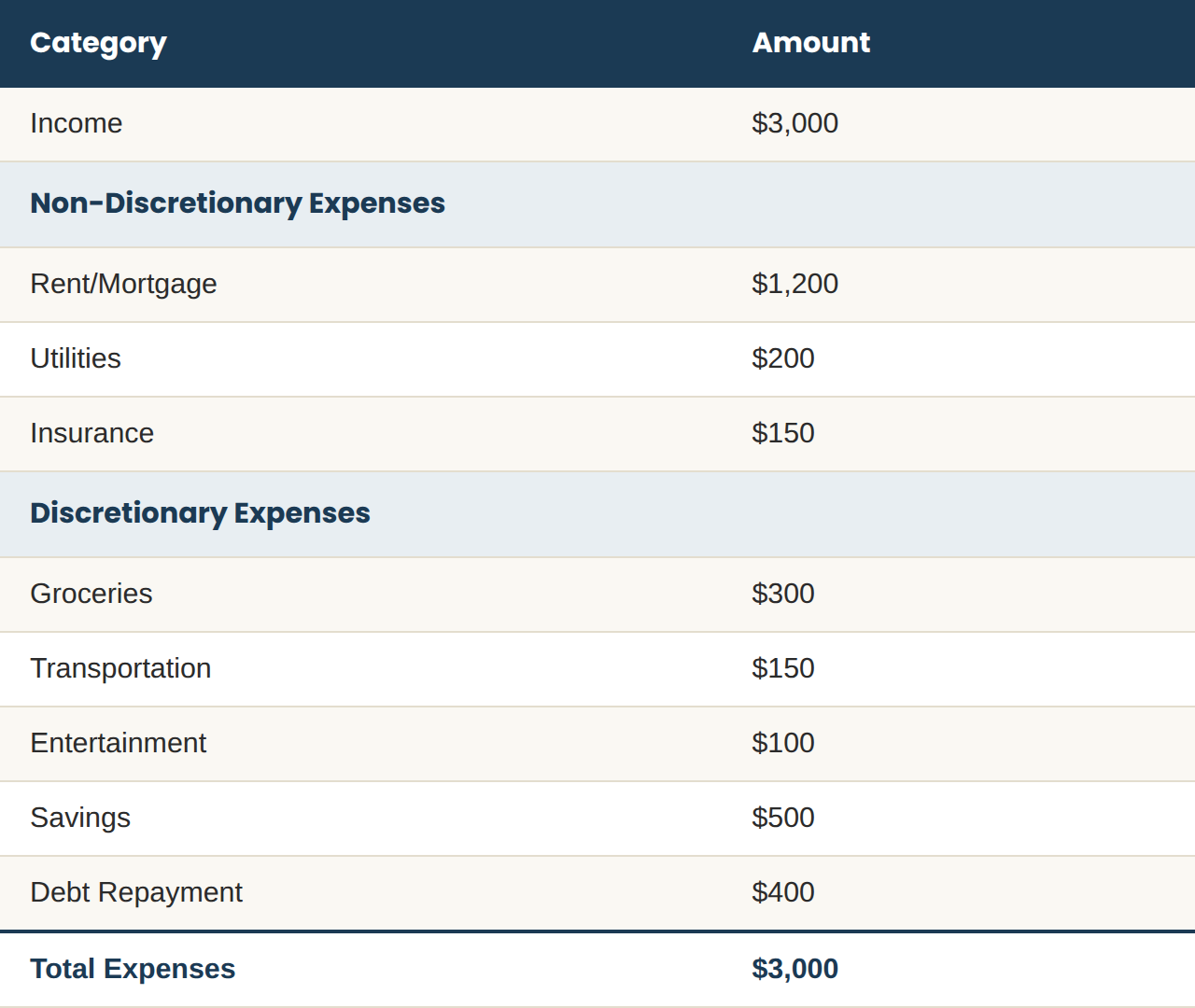
Sample budget is a hypothetical scenario
Track What You Spend
A budget only works if you check it against reality.
Manual tracking: a notebook or spreadsheet — simple, and it works.
Apps: link your accounts and let the tracking happen automatically.
Monthly review: at month's end, look at what matched the plan and what didn't, and adjust.
When You Need to Cut Back
Sometimes reaching a goal means tightening things up for a while — paying off debt faster, saving for something big, or just getting back on track.
Know when it's time. If a goal matters enough, it's worth trimming the discretionary side for a stretch.
Decide what goes first. Look at your discretionary expenses and be honest about what you'd barely miss.
Remember why. Every dollar you hold back now is a dollar closer to whatever you're actually working toward.
Financial discipline isn't about deprivation — it's about choosing what matters enough to prioritize, on purpose, instead of by accident.
One of the clearest examples of this we've seen firsthand is a couple we'll call Jeff and Sally — names changed to protect their privacy, but the story itself is real. A middle-class family, not a high-income one, who built genuine financial independence through years of consistent discipline rather than any single big break. They prioritized long-term goals over short-term spending, avoided the lifestyle upgrades that tend to creep in as income rises, and made steady, unglamorous choices — contributing diligently to retirement accounts, setting aside money for their children's education, and living modestly relative to what they could have spent. Over years of those choices, a middle-class income turned into several million dollars in savings. None of it happened quickly, and none of it required a dramatic decision. It was consistency, on purpose, for a long time.
Making It Stick
Set reminders for bill due dates and a regular budget check-in.
Pause before impulse purchases — ask whether it actually fits the plan.
Build in some flexibility so one unexpected expense doesn't derail everything.
Review it monthly. A budget isn't something you set once — it's worth revisiting as things change.
The Bottom Line
A budget isn't really about the numbers — it's about making your spending match what actually matters to you. Understand where you stand, set goals that mean something, pick a method you'll keep using, and check in on it regularly. That's really all it takes to get started.
Have a question about your own situation? This guide is general education, not personal advice — if you'd like to talk through your specific situation, a conversation is free, and there's no obligation - Just Click Here!